Salary Calculator Australia
Enter any salary and see your real 2026-27 take-home pay after income tax, the 2% Medicare levy and HECS-HELP, with 12% super shown on top.
Australian Take-Home Pay Calculator 2026-27
2026-27 Tax Brackets
Resident marginal rates behind every salary result. The first rate was cut from 16% to 15% from 1 July 2026.
| Taxable income | Rate | Tax on this income |
|---|---|---|
| $0 – $18,200 | 0% | Nil (tax-free threshold) |
| $18,201 – $45,000 | 15% | 15c per $1 over $18,200 |
| $45,001 – $135,000 | 30% | $4,020 + 30c per $1 over $45,000 |
| $135,001 – $190,000 | 37% | $31,020 + 37c per $1 over $135,000 |
| $190,001 + | 45% | $51,370 + 45c per $1 over $190,000 |
Excludes the 2% Medicare levy. New for 2026-27: a $1,000 standard work deduction you can claim at tax time. Source: Australian Taxation Office.
Any Salary to Take-Home Pay
Common salaries mapped to their 2026-27 take-home pay, effective tax rate and super. Every figure is calculated from current ATO rates.
| Gross salary | Income tax | Medicare levy | Take-home pay | Effective rate | Super (12%) |
|---|---|---|---|---|---|
| $30,000 | $1,070 | $199 | $28,731 | 4.2% | $3,600 |
| $40,000 | $2,695 | $800 | $36,505 | 8.7% | $4,800 |
| $50,000 | $5,270 | $1,000 | $43,730 | 12.5% | $6,000 |
| $60,000 | $8,420 | $1,200 | $50,380 | 16% | $7,200 |
| $70,000 | $11,520 | $1,400 | $57,080 | 18.5% | $8,400 |
| $80,000 | $14,520 | $1,600 | $63,880 | 20.2% | $9,600 |
| $90,000 | $17,520 | $1,800 | $70,680 | 21.5% | $10,800 |
| $100,000 | $20,520 | $2,000 | $77,480 | 22.5% | $12,000 |
| $110,000 | $23,520 | $2,200 | $84,280 | 23.4% | $13,200 |
| $120,000 | $26,520 | $2,400 | $91,080 | 24.1% | $14,400 |
| $130,000 | $29,520 | $2,600 | $97,880 | 24.7% | $15,600 |
| $140,000 | $32,870 | $2,800 | $104,330 | 25.5% | $16,800 |
| $150,000 | $36,570 | $3,000 | $110,430 | 26.4% | $18,000 |
| $160,000 | $40,270 | $3,200 | $116,530 | 27.2% | $19,200 |
| $170,000 | $43,970 | $3,400 | $122,630 | 27.9% | $20,400 |
| $180,000 | $47,670 | $3,600 | $128,730 | 28.5% | $21,600 |
| $190,000 | $51,370 | $3,800 | $134,830 | 29% | $22,800 |
| $200,000 | $55,870 | $4,000 | $140,130 | 29.9% | $24,000 |
Australian resident, no HECS-HELP, super paid on top of salary. Enter your own number in the calculator for foreign resident, working holiday or study-loan results.
How Your Salary Becomes Take-Home Pay
This calculator works for any salary, from a part-time wage to a six-figure package. Type your gross salary in and it applies the 2026-27 ATO brackets to each slice of your income, takes off the 2% Medicare levy, and shows your net take-home pay. Super is added on top at 12%, because it is paid by your employer and is not part of the pay that reaches your bank account.
You do not pay one flat rate on your whole salary. The first $18,200 is tax-free, the next band is taxed at 15%, and only the income above each threshold is taxed at the higher rate. That is why your average tax rate is always lower than your marginal rate.
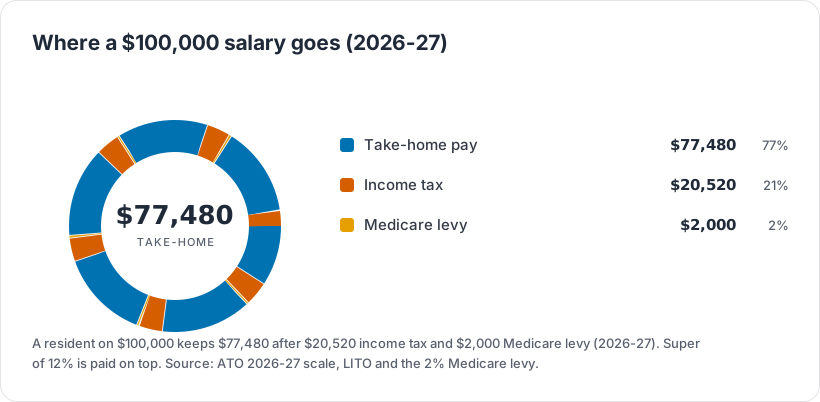
Worked example, $100,000 salary: the income tax comes to $20,520 and the Medicare levy adds $2,000, leaving $77,480 take-home. Your marginal rate is 30%, but your average tax rate is only 22.5%.
Prefer to think in yearly terms? The annual salary calculator shows the same result as a clean gross-to-net figure. For a full deduction breakdown across every pay cycle, use the take-home pay calculator, and to isolate just the tax on your salary, see the income tax calculator.
Tax on a $100,000 Salary
Your Salary as Weekly, Fortnightly and Monthly Pay
The same 2026-27 take-home split across the pay cycles Australians are actually paid on. Frequency changes the timing, not the yearly total.
| Salary | Take-home per year | Per month | Per fortnight | Per week |
|---|---|---|---|---|
| $50,000 | $43,730 | $3,644 | $1,682 | $841 |
| $70,000 | $57,080 | $4,757 | $2,195 | $1,098 |
| $90,000 | $70,680 | $5,890 | $2,718 | $1,359 |
| $120,000 | $91,080 | $7,590 | $3,503 | $1,752 |
| $150,000 | $110,430 | $9,203 | $4,247 | $2,124 |
Australian resident, no HECS-HELP, super on top. For a cycle-by-cycle view see the fortnightly pay calculator, monthly pay calculator or weekly pay calculator. Source: Australian Taxation Office.
Things to Get Right on a Salary
Small misreadings that change the take-home figure.
Base salary vs package
A salary quoted "including super" bundles the 12% guarantee. Divide by 1.12 to find the base that tax is actually calculated on, or use the gross to net calculator for the split.
Marginal rate vs what you pay
Your marginal rate on $100,000 is 30%, but the effective rate across tax and the levy is only 22.5%. The difference is explained in marginal vs average tax rate.
Leaving out the study loan
A HECS-HELP debt takes $3,071 from a $90,000 salary in 2026-27. Check yours with the HECS-HELP repayment calculator.
Overlooking the surcharge
Above $105,000 without private hospital cover, the Medicare levy surcharge adds 1% to 1.5% on top of the 2% Medicare levy.
Salary Calculator FAQ
Common questions about turning a salary into take-home pay.