A tax offset and a tax deduction are constantly confused, and the gap between them is worth real money. A deduction lowers the income your tax is worked out on. An offset comes off the tax bill itself, after the brackets have already done their work, which makes it worth far more per dollar. The Low Income Tax Offset, or LITO, is the offset almost every Australian resident on a modest income actually receives, and it quietly does two things most people never notice: it pushes the real tax-free point well past $18,200, and it raises your true marginal rate while it phases out. This guide explains the mechanism. For the arithmetic on your own income, use the Low Income Tax Offset calculator.
Key takeaways
- An offset reduces tax owed; a deduction reduces taxable income. Offsets are worth more per dollar.
- LITO is worth up to $700 for 2026-27, unchanged by the 2026-27 tax cuts.
- LITO is non-refundable: it can cancel your tax to $0, but it never creates a refund by itself.
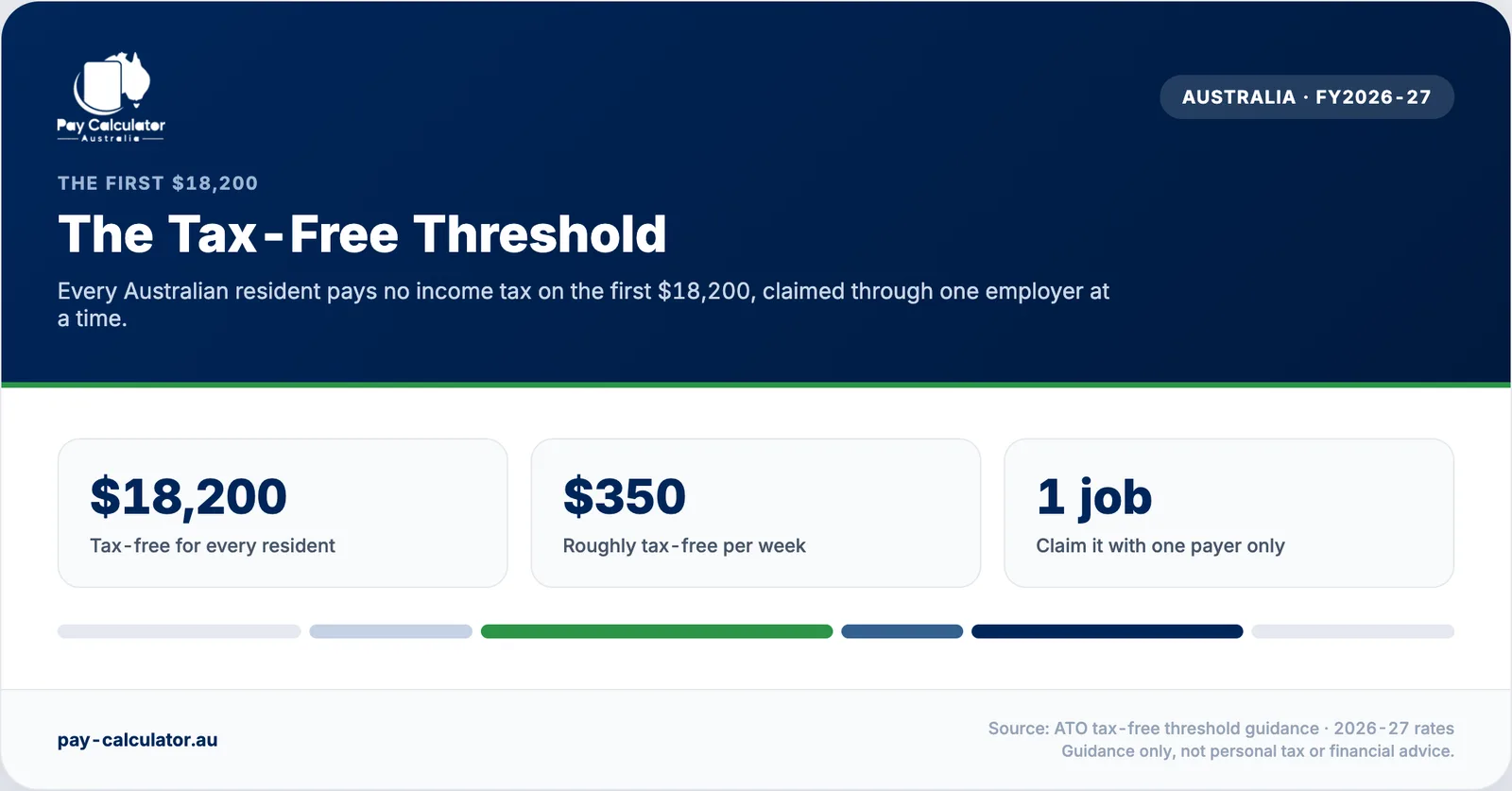
- With LITO applied, a resident pays no income tax at all until about $22,867, not $18,200.
- LITO does not reduce the 2% Medicare levy. That is a separate calculation entirely.
What is a tax offset?
A tax offset (also called a rebate) is an amount the Australian Taxation Office subtracts directly from the income tax you owe, calculated after the 2026-27 tax brackets have already been applied to your taxable income. It is the last step in the sequence, not the first. Offsets exist for various circumstances, but the one that touches the largest number of taxpayers by far is LITO, which most resident wage earners on low to middle incomes receive automatically, without applying for it.
A deduction is a different animal. It reduces your taxable income before any rate is applied, so its value depends on your marginal rate. The new 2026-27 standard $1,000 work-related deduction is an example: it is worth up to $1,000 off your taxable income, not $1,000 off your tax bill. Confusing the two leads people to overestimate what a deduction is worth and underestimate what an offset does.
How much more is an offset worth than a deduction?
Run the same $700 through both mechanisms and the gap is obvious. A $700 deduction only saves you your marginal rate times $700. A $700 offset saves you the whole thing, provided you owe at least that much tax.
| Taxable income | Marginal rate | A $700 deduction saves | A $700 offset saves |
|---|---|---|---|
| $30,000 | 15% | $105 | $700 |
| $90,000 | 30% | $210 | $700 |
Notice the deduction column moves with the bracket rate while the offset column does not: an offset is worth its face value at any income, so long as your tax bill is large enough to absorb it. That is also why offsets get withdrawn as income rises, the way LITO does, rather than staying flat like a deduction’s marginal-rate saving does.
What is the Low Income Tax Offset (LITO)?
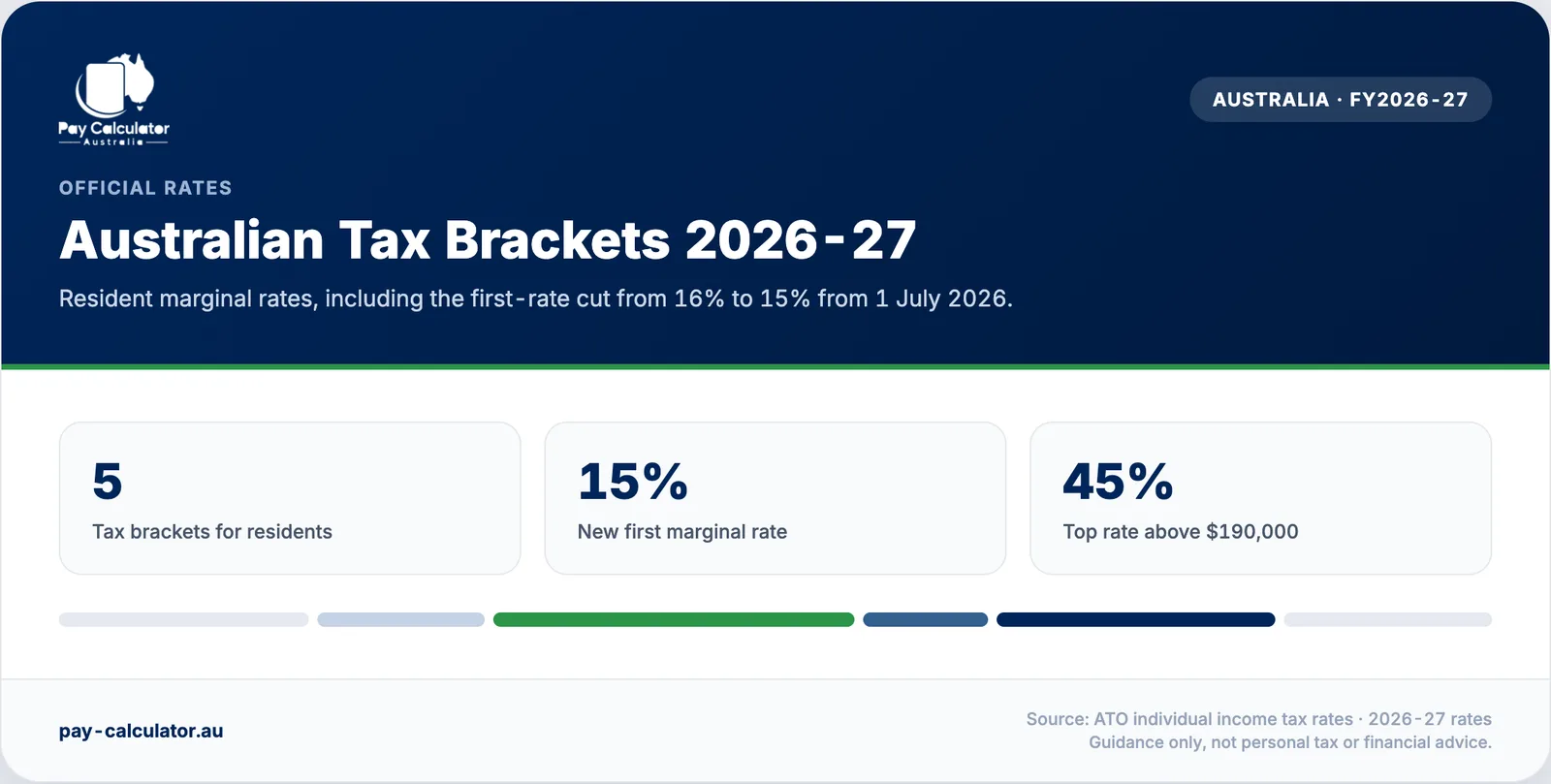
LITO is a permanent, non-refundable offset worth up to $700 for 2026-27. It is unchanged from 2025-26, because the first-rate cut that took effect on 1 July 2026 changed the brackets, not the offset scale. You get the full amount up to $37,500 of taxable income, then it is withdrawn in two steps until it disappears entirely at $66,667.
| Taxable income | Income tax before LITO | LITO | Income tax after LITO |
|---|---|---|---|
| $20,000 | $270 | $700 | $0 |
| $30,000 | $1,770 | $700 | $1,070 |
| $37,500 | $2,895 | $700 | $2,195 |
| $40,000 | $3,270 | $575 | $2,695 |
| $45,000 | $4,020 | $325 | $3,695 |
| $55,000 | $7,020 | $175 | $6,845 |
| $60,000 | $8,520 | $100 | $8,420 |
| $66,667 | $10,520 | $0 | $10,520 |
Read the $20,000 row against the $60,000 row: the offset is largest exactly where income tax is smallest, and it has shrunk to $100 by $60,000. LITO is applied automatically when you lodge; there is no box to tick and no separate claim. For the full offset-by-income breakdown and a live calculator, see the Low Income Tax Offset calculator.
Why is the real tax-free point $22,867, not $18,200?
The $18,200 tax-free threshold is where the 0% bracket ends, but it is not where you actually start paying tax. Because LITO cancels the first $700 of income tax for anyone earning $37,500 or less, the 15% bracket has to generate more than $700 of tax before you owe anything at all. Solving that point on the live 2026-27 engine puts it at about $22,867, roughly $4,667 above the headline threshold.
A resident with no other offsets and no HELP debt pays $0 in income tax on any taxable income up to about $22,867 for 2026-27, not $18,200. The tax-free threshold and LITO are two separate mechanisms that happen to stack.
This is the single most useful fact this page adds beyond the two thresholds guides already cover: the $18,200 figure explains the tax-free threshold on its own, and the $700 figure explains LITO on its own, but neither tells you where they combine to. A part-time or casual worker earning under $22,867 in 2026-27 owes no income tax, though they may still owe the Medicare levy, which follows its own separate low-income phase-in.
How does LITO change your true marginal rate?
Withdrawing an offset costs you money exactly the way a tax rate does. Between $37,501 and $45,000, every extra dollar is taxed at the 15% bracket rate and loses 5c of LITO, so the true marginal rate is 20%, not 15%. Between $45,001 and $66,667, the bracket rate of 30% combines with a 1.5c withdrawal for a true rate of 31.5%. Add the 2% Medicare levy on top of either figure for the full cost of your next dollar.
None of this makes a pay rise a bad thing: earning more never leaves you worse off, because the offset withdraws more slowly than the extra income arrives. It does explain why a raise through this range feels thinner than the headline bracket rate suggests. The full effective-marginal-rate table, computed across the whole taper, is on the LITO calculator, and the general marginal-versus-average distinction is covered in the marginal vs average tax rate guide.
Does LITO reduce the Medicare levy?
No. This is the single most costly misconception about LITO, so it is worth stating plainly: LITO reduces income tax only. The Medicare levy is a separate 2% calculation on taxable income, and no offset touches it. On a $60,000 income, LITO removes $100 from the income tax bill, but the $1,200 Medicare levy is unaffected and paid in full. Relief from the levy comes from a different, separate mechanism: the Medicare levy’s own low-income shade-in, covered in the Medicare levy calculator.
Is LITO refundable?
No. LITO is non-refundable, meaning it can reduce your income tax to $0 but never below it, and any offset left over once your tax reaches zero is simply lost. It is not paid to you in cash, not carried forward to next year, and not transferred to anyone else.
On a taxable income of $20,000, the income tax before any offset is only $270, well under the $700 of LITO on offer. The offset cancels the $270 and the remaining $430 does nothing at all. If you still get money back after lodging a return in this situation, it is not LITO being refunded: it is tax your employer withheld during the year being returned to you, which is a separate process covered in the tax refund calculator.
Worked example: LITO on a $45,000 salary
Take a resident on a $45,000 salary for 2026-27, with no HELP debt and super paid on top. The same engine that runs every calculator on this site produces every figure below.
- Income tax before any offset: $4,020.
- LITO at this income: $325.
- Income tax after LITO: $3,695.
- Medicare levy (untouched by LITO): $900.
- Take-home pay: $40,405.
- Employer super on top of the salary: $5,400.
Without LITO, this salary would carry $4,020 of income tax. With it, the bill drops to $3,695, a saving of $325 that never shows up as a separate line on a payslip because employer withholding already builds a share of it in. The average tax rate on this salary, income tax and the Medicare levy combined, works out to 10.2%. Run your own salary through the same logic on the take-home pay calculator.
Frequently asked questions
Sources
All figures verified against the named documents. Last verified 30 July 2026.
- ATO, Low income tax offset (maximum $700, the $37,500 and $45,000 withdrawal steps, cut-out at $66,667, non-refundable, applied automatically), last updated 8 June 2026.
- ATO, Tax rates: Australian residents (the 2026-27 resident scale LITO is subtracted from), last updated 1 June 2026.
- ATO, Personal income tax: new tax cuts for every Australian taxpayer (confirms LITO was not altered by the 16% to 15% first-rate cut from 1 July 2026), last updated 13 May 2026.
- ATO, Medicare levy reduction for low-income earners (the levy is calculated separately from income tax and its offsets), last updated 30 June 2026.